

Glanceable Thermostat
I led the design of a premium thermostat experience that removes ambiguity and makes temperature adjustments feel obvious, responsive, and trustworthy.
2025 | Lead Product Designer
Glanceable Thermostat
I led the design of a premium thermostat experience that removes ambiguity and makes temperature adjustments feel obvious, responsive, and trustworthy.
2025 | Lead Product Designer
Glanceable Thermostat
I led the design of a premium thermostat experience that removes ambiguity and makes temperature adjustments feel obvious, responsive, and trustworthy.
2025 | Lead Product Designer
Challenge
Challenge
Challenge
After NRG acquired Vivint, the organization set out to dramatically scale thermostat adoption to support grid-level demand response. This created two parallel initiatives:
A short-term effort to reuse existing hardware with new software (Codename: Titan)
A long-term effort to design a best-in-class thermostat that preserved Vivint’s premium brand and competed at the top of the market (Codename: Pegasus)
This case study focuses on Pegasus, specifically the on-device screen experience.
Users needed a thermostat that felt reliable, calm, and premium. It needed to offer meaningful control when approached without adding visual noise to the home.
After NRG acquired Vivint, the organization set out to dramatically scale thermostat adoption to support grid-level demand response. This created two parallel initiatives:
A short-term effort to reuse existing hardware with new software (Codename: Titan)
A long-term effort to design a best-in-class thermostat that preserved Vivint’s premium brand and competed at the top of the market (Codename: Pegasus)
This case study focuses on Pegasus, specifically the on-device screen experience.
Users needed a thermostat that felt reliable, calm, and premium. It needed to offer meaningful control when approached without adding visual noise to the home.
After NRG acquired Vivint, the organization set out to dramatically scale thermostat adoption to support grid-level demand response. This created two parallel initiatives:
A short-term effort to reuse existing hardware with new software (Codename: Titan)
A long-term effort to design a best-in-class thermostat that preserved Vivint’s premium brand and competed at the top of the market (Codename: Pegasus)
This case study focuses on Pegasus, specifically the on-device screen experience.
Users needed a thermostat that felt reliable, calm, and premium. It needed to offer meaningful control when approached without adding visual noise to the home.
Design Solution
Design Solution
Design Solution
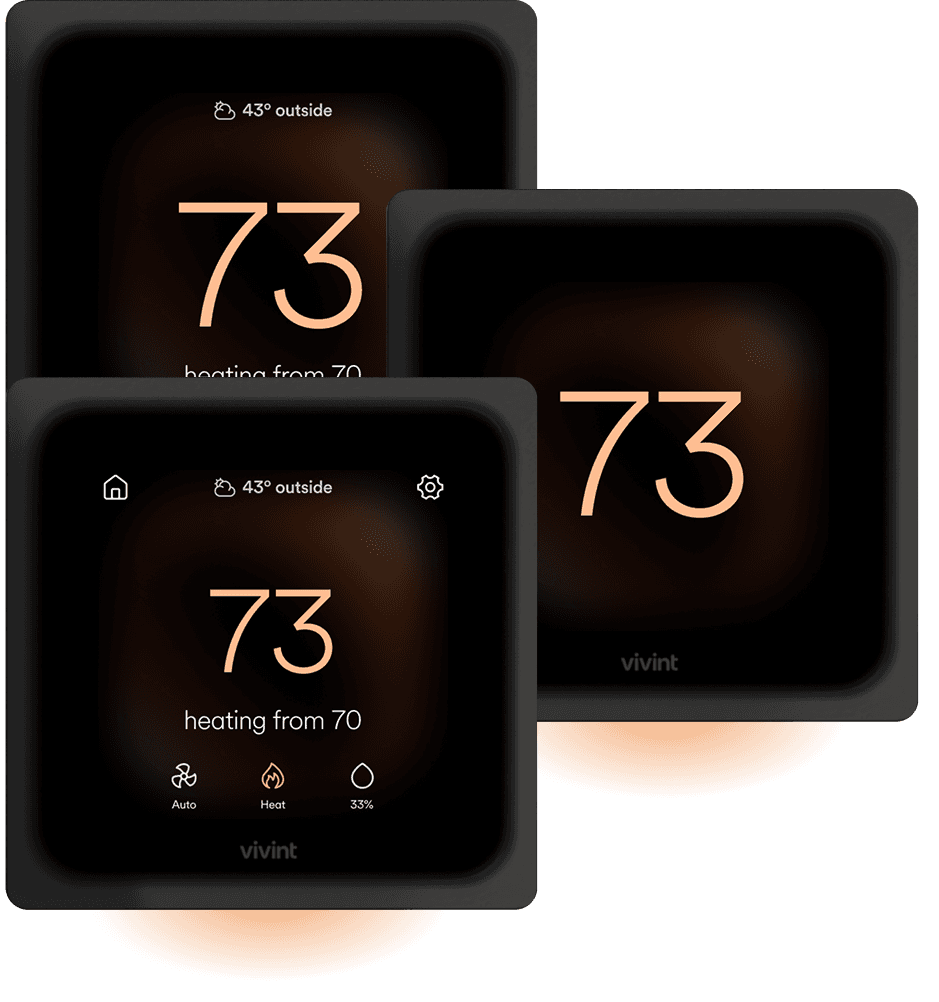
A presence-aware thermostat experience that adapts based on the user’s proximity to the device.
Using a proximity sensor, the screen progressively reveals information as user intent increases. The default state remains calm and unobtrusive while becoming powerful when engaged.
A visual strategy using gradients hides the edges of the screen, allowing it to blend seamlessly into the product’s form.
A presence-aware thermostat experience that adapts based on the user’s proximity to the device.
Using a proximity sensor, the screen progressively reveals information as user intent increases. The default state remains calm and unobtrusive while becoming powerful when engaged.
A visual strategy using gradients hides the edges of the screen, allowing it to blend seamlessly into the product’s form.
A presence-aware thermostat experience that adapts based on the user’s proximity to the device.
Using a proximity sensor, the screen progressively reveals information as user intent increases. The default state remains calm and unobtrusive while becoming powerful when engaged.
A visual strategy using gradients hides the edges of the screen, allowing it to blend seamlessly into the product’s form.
Feels premium and unobtrusive in the home
Feels premium and unobtrusive in the home
Feels premium and unobtrusive in the home
Minimizes cognitive load
Minimizes cognitive load
Minimizes cognitive load
Scales information based on user intent
Scales information based on user intent
Scales information based on user intent

Impact
Impact
Impact
This project is currently in development. Projected impact will be validated following launch in 2027.
This project is currently in development. Projected impact will be validated following launch in 2027.
This project is currently in development. Projected impact will be validated following launch in 2027.
Expected impact includes:
Enabling Vivint to compete at the top of the market with brands such as Ecobee and Nest
Increasing purchase intent and customer lifetime value
Improving brand perception
Expected impact includes:
Enabling Vivint to compete at the top of the market with brands such as Ecobee and Nest
Increasing purchase intent and customer lifetime value
Improving brand perception
Expected impact includes:
Enabling Vivint to compete at the top of the market with brands such as Ecobee and Nest
Increasing purchase intent and customer lifetime value
Improving brand perception
By prioritizing clarity, progressive disclosure, and a premium product, users are more likely to purchase a Vivint thermostat, enroll in demand response, and stick with their Vivint thermostat.
By prioritizing clarity, progressive disclosure, and a premium product, users are more likely to purchase a Vivint thermostat, enroll in demand response, and stick with their Vivint thermostat.
By prioritizing clarity, progressive disclosure, and a premium product, users are more likely to purchase a Vivint thermostat, enroll in demand response, and stick with their Vivint thermostat.
Process
Process
Foundational Research
Foundational Research
Foundational Research
Design Exploration
Design Exploration
Design Exploration
Usability Testing
Usability Testing
Usability Testing
Design Refinement
Design Refinement
Design Refinement
Development
Development
Development
Foundational Research Insights
Foundational Research Insights
Foundational Research Insights
I partnered with our research team to conduct foundational research to understand how users perceive and interact with thermostats in their homes. These insights informed both hardware and software design principles.
I partnered with our research team to conduct foundational research to understand how users perceive and interact with thermostats in their homes. These insights informed both hardware and software design principles.
I partnered with our research team to conduct foundational research to understand how users perceive and interact with thermostats in their homes. These insights informed both hardware and software design principles.
Device is an essential backup
Device is an essential backup
Device is an essential backup
We were curious about a solution that had no interface. However, while users primarily rely on the mobile app, the physical device is considered essential as a backup interaction point. Participants expressed concern that connectivity issues, troubleshooting, or having a broken or lost phone would leave them powerless to adjust their thermostat.
We were curious about a solution that had no interface. However, while users primarily rely on the mobile app, the physical device is considered essential as a backup interaction point. Participants expressed concern that connectivity issues, troubleshooting, or having a broken or lost phone would leave them powerless to adjust their thermostat.
We were curious about a solution that had no interface. However, while users primarily rely on the mobile app, the physical device is considered essential as a backup interaction point. Participants expressed concern that connectivity issues, troubleshooting, or having a broken or lost phone would leave them powerless to adjust their thermostat.
Clarity of UI & architecture
Clarity of UI & architecture
Clarity of UI & architecture
Participants expressed a strong preference for large, clear, and concise information. Several specifically mentioned that color aids comprehension. Users become overwhelmed and confused when their thermostats show advanced information, many small words, excessive symbols, buttons, and layers of settings.
Participants expressed a strong preference for large, clear, and concise information. Several specifically mentioned that color aids comprehension. Users become overwhelmed and confused when their thermostats show advanced information, many small words, excessive symbols, buttons, and layers of settings.
Participants expressed a strong preference for large, clear, and concise information. Several specifically mentioned that color aids comprehension. Users become overwhelmed and confused when their thermostats show advanced information, many small words, excessive symbols, buttons, and layers of settings.
Situationally responsive info
Situationally responsive info
Situationally responsive info
Only set temperature information is required at a distance. Additional detail is welcome when users approach or interact with the device.
Only set temperature information is required at a distance. Additional detail is welcome when users approach or interact with the device.
Only set temperature information is required at a distance. Additional detail is welcome when users approach or interact with the device.
Out of sight out of mind
Out of sight out of mind
Out of sight out of mind
Participants used words like minimalist, sleek, non-offensive, and blend in. Many wished their thermostat were thinner or less visually intrusive. Users preferred a minimal amount of clearly visible information from a short distance.
Participants used words like minimalist, sleek, non-offensive, and blend in. Many wished their thermostat were thinner or less visually intrusive. Users preferred a minimal amount of clearly visible information from a short distance.
Participants used words like minimalist, sleek, non-offensive, and blend in. Many wished their thermostat were thinner or less visually intrusive. Users preferred a minimal amount of clearly visible information from a short distance.
Essence of a high tech device
Essence of a high tech device
Essence of a high tech device
Participants preferred high-quality materials over plastic. Smartphone-inspired aesthetics were viewed positively.
Participants preferred high-quality materials over plastic. Smartphone-inspired aesthetics were viewed positively.
Participants preferred high-quality materials over plastic. Smartphone-inspired aesthetics were viewed positively.
Design Exploration
Design Exploration
Design Exploration
Design exploration was informed by foundational research and refined through multiple design reviews.
Design exploration was informed by foundational research and refined through multiple design reviews.
Design exploration was informed by foundational research and refined through multiple design reviews.

Hardware and software were developed concurrently. Early screen concepts were circular. Ultimately, Industrial Design selected a square screen for the final form.
Hardware and software were developed concurrently. Early screen concepts were circular. Ultimately, Industrial Design selected a square screen for the final form.
Hardware and software were developed concurrently. Early screen concepts were circular. Ultimately, Industrial Design selected a square screen for the final form.

Early ideas included representing the weather, as well as representing HVAC activity with patterns, glows, and abstract forms. These concepts were eventually removed in favor of a more minimalist, clear representation aligned with our goals of high-tech and “out of sight, out of mind.”
Early ideas included representing the weather, as well as representing HVAC activity with patterns, glows, and abstract forms. These concepts were eventually removed in favor of a more minimalist, clear representation aligned with our goals of high-tech and “out of sight, out of mind.”
Early ideas included representing the weather, as well as representing HVAC activity with patterns, glows, and abstract forms. These concepts were eventually removed in favor of a more minimalist, clear representation aligned with our goals of high-tech and “out of sight, out of mind.”

The concept above was selected as our baseline design for usability testing. Based on research insights, we hypothesized that this information architecture and symbolism would provide a strong solution.
The concept above was selected as our baseline design for usability testing. Based on research insights, we hypothesized that this information architecture and symbolism would provide a strong solution.
The concept above was selected as our baseline design for usability testing. Based on research insights, we hypothesized that this information architecture and symbolism would provide a strong solution.
Usability Testing
Usability Testing
Usability Testing
To ensure Pegasus could compete meaningfully in the market and improve upon our existing product, I partnered with Vivint’s research team to conduct a comparative usability study evaluating:
To ensure Pegasus could compete meaningfully in the market and improve upon our existing product, I partnered with Vivint’s research team to conduct a comparative usability study evaluating:
To ensure Pegasus could compete meaningfully in the market and improve upon our existing product, I partnered with Vivint’s research team to conduct a comparative usability study evaluating:
Pegasus Concept
Pegasus Concept
Pegasus Concept

Element
(Vivint’s current thermostat)
Element
(Vivint’s current thermostat)
Element
(Vivint’s current thermostat)

Nest Gen 4
Nest Gen 4
Nest Gen 4

Methodology
Methodology
Methodology
Participants were asked to attempt the same 7 core tasks on each thermostat
Participants were asked to attempt the same 7 core tasks on each thermostat
Participants were asked to attempt the same 7 core tasks on each thermostat.
For each task, we collected
For each task, we collected
For each task, we collected
Predicted difficulty before task (1 = very hard, 7 = very easy)
Actual difficulty after task (1 = very hard, 7 = very easy)
Time to completion
Number of taps
Failure or abandonment
Predicted difficulty before task (1 = very hard, 7 = very easy)
Actual difficulty after task (1 = very hard, 7 = very easy)
Time to completion
Number of taps
Failure or abandonment
Predicted difficulty before task (1 = very hard, 7 = very easy)
Actual difficulty after task (1 = very hard, 7 = very easy)
Time to completion
Number of taps
Failure or abandonment
After completing tasks on each thermostat, participants
After completing tasks on each thermostat, participants
After completing tasks on each thermostat, participants
Answered comprehension questions about on-screen elements
Ranked overall preference and explained why
Answered comprehension questions about on-screen elements
Ranked overall preference and explained why
Answered comprehension questions about on-screen elements
Ranked overall preference and explained why
To reduce learning effects and bias
To reduce learning effects and bias
To reduce learning effects and bias
Task order was randomized per participant
Product testing order was randomized per participant
Task order was randomized per participant
Product testing order was randomized per participant
Task order was randomized per participant
Product testing order was randomized per participant
This structure allowed us to measure performance, expectation versus reality, comprehension, and perceived usability.
This structure allowed us to measure performance, expectation versus reality, comprehension, and perceived usability.
This structure allowed us to measure performance, expectation versus reality, comprehension, and perceived usability.
Results
Results
Results
Pegasus showed substantial improvement in clarity, discoverability, and efficiency, compared to Nest and Element. We were pleased to discover a 98% task success rate and a 35 second reduction of time on task during user testing
Pegasus showed substantial improvement in clarity, discoverability, and efficiency, compared to Nest and Element. We were pleased to discover a 98% task success rate and a 35 second reduction of time on task during user testing
Pegasus showed substantial improvement in clarity, discoverability, and efficiency, compared to Nest and Element. We were pleased to discover a 98% task success rate and a 35 second reduction of time on task during user testing


Design Refinement
Design Refinement
Design Refinement
While leadership was pleased with usability results, they requested additional stylistic breadth within the same architecture and symbolism. The refinement focused on strengthening progressive disclosure.
While leadership was pleased with usability results, they requested additional stylistic breadth within the same architecture and symbolism. The refinement focused on strengthening progressive disclosure.
While leadership was pleased with usability results, they requested additional stylistic breadth within the same architecture and symbolism. The refinement focused on strengthening progressive disclosure.

Solution: Progressive disclosure
Solution: Progressive disclosure
Solution: Progressive disclosure

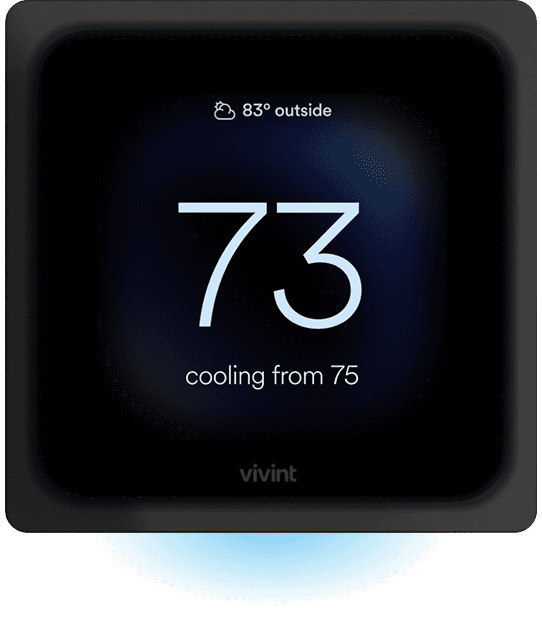
10 feet away
10 feet away
10 feet away
Displays set temperature only
Subtle background gradient communicates system state:
Warm orange for heating
Cool blue for cooling
This supports instant comprehension with zero interaction.
Displays set temperature only
Subtle background gradient communicates system state:
Warm orange for heating
Cool blue for cooling
This supports instant comprehension with zero interaction.
Displays set temperature only
Subtle background gradient communicates system state:
Warm orange for heating
Cool blue for cooling
This supports instant comprehension with zero interaction.
6 feet away
6 feet away
6 feet away
Adds contextual information:
Set temperature
Current indoor temperature
Outside weather & temperature
At this distance, users are often deciding whether to make a change. This information supports comfort decisions without adding clutter.
Adds contextual information:
Set temperature
Current indoor temperature
Outside weather & temperature
At this distance, users are often deciding whether to make a change. This information supports comfort decisions without adding clutter.
Adds contextual information:
Set temperature
Current indoor temperature
Outside weather & temperature
At this distance, users are often deciding whether to make a change. This information supports comfort decisions without adding clutter.

3 feet away
3 feet away
3 feet away
Full control UI appears:
Settings
Mode
Fan
Humidity
Now within arm's reach, users have all the tools they need to make an adjustment.
Full control UI appears:
Settings
Mode
Fan
Humidity
Now within arm's reach, users have all the tools they need to make an adjustment.
Full control UI appears:
Settings
Mode
Fan
Humidity
Now within arm's reach, users have all the tools they need to make an adjustment.
Adjusting temperature
Adjusting temperature
Adjusting temperature
Tapping the set temperature enters a focused temperature-selection:
Secondary UI fades away
Picker surfaces surrounding temperature values
Current temperature remains visible
Clear exit path via back arrow
After 3 seconds of inactivity, the interface returns to its simplified state.
Tapping the set temperature enters a focused temperature-selection:
Secondary UI fades away
Picker surfaces surrounding temperature values
Current temperature remains visible
Clear exit path via back arrow
After 3 seconds of inactivity, the interface returns to its simplified state.
Tapping the set temperature enters a focused temperature-selection:
Secondary UI fades away
Picker surfaces surrounding temperature values
Current temperature remains visible
Clear exit path via back arrow
After 3 seconds of inactivity, the interface returns to its simplified state.

Why this works
Why this works
Why this works
Matches information density to user intent
Matches information density to user intent
Matches information density to user intent
Reduces cognitive load
Reduces cognitive load
Reduces cognitive load
Preserves visual calm in the home
Preserves visual calm in the home
Preserves visual calm in the home
Aligns with expectations of a premium product
Aligns with expectations of a premium product
Aligns with expectations of a premium product
Currently in Development
Currently in Development
Currently in Development

Release schedule
Release schedule
Release schedule
Alpha: July 2026
Alpha: July 2026
Alpha: July 2026
Beta: September 2026
Beta: September 2026
Beta: September 2026
Product Launch: Q1 2027
Product Launch: Q1 2027
Product Launch: Q1 2027
View more work
View more work
View more work

Thermostat Installation
Reducing risk of errors and damage costs through guided UX and automation.
View Project
Jenny Eckles 2026
Jenny Eckles 2026